Where to practise when you live in a city
Updated 6 September 2026
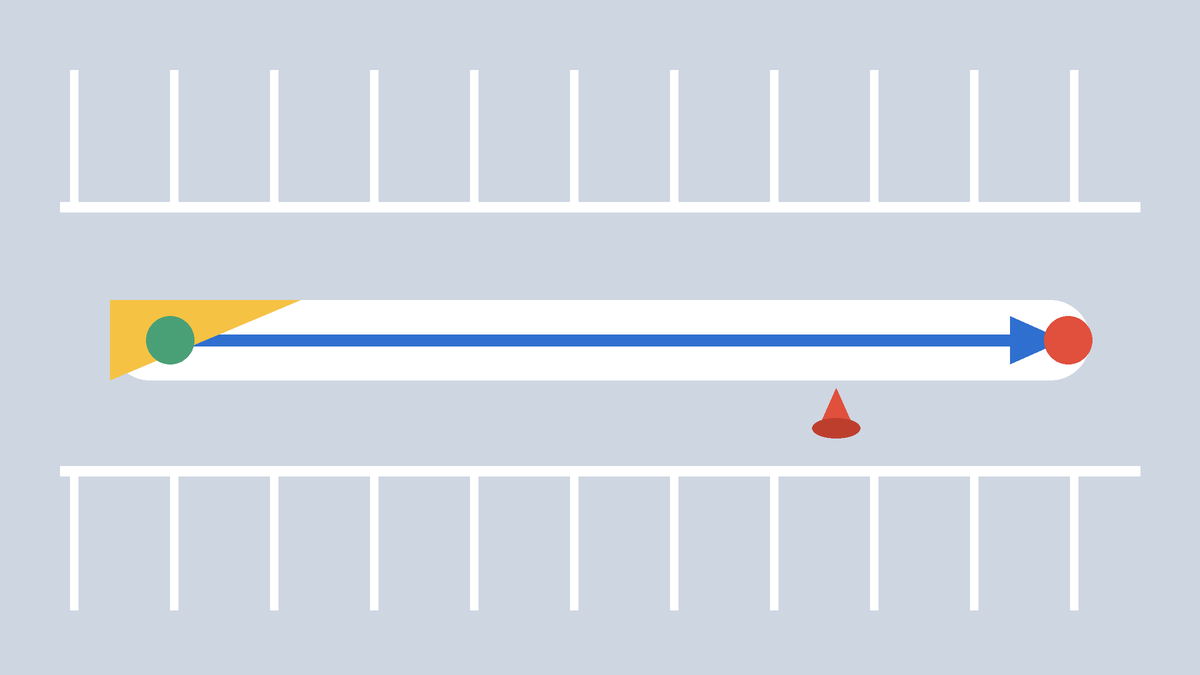
The advice to find somewhere quiet is easy to give and hard to act on if you live on a busy street. It helps to know exactly what you are looking for, because the requirements are narrower and stranger than they first appear.
What the space actually needs
- Room to roll thirty metres in a straight line without steering around anything.
- A surface that is smooth but not slippery. Tarmac and packed grass both work; loose gravel and painted concrete do not.
- A very slight slope somewhere, ideally at one end. Two or three degrees is plenty — enough to roll without pedalling.
- No through traffic of any kind, including cyclists and scooters, for the whole session.
- Nobody watching. This matters more than adults expect and is the reason a busy park often works worse than a dull side street.
Six places that tend to work
An empty car park at the right time. Office parks on Sunday morning, supermarket overflow areas before opening, and industrial estates at weekends are the classic answers. Surfaces are smooth, the lines make useful markers, and they are usually completely empty for a few predictable hours.
A school playground outside term time or at weekends, where local rules allow. Often has exactly the right combination of smooth surface, boundary walls and nobody around.
A quiet cul-de-sac. Residential dead ends have almost no through traffic, and neighbours are generally tolerant of a child learning to ride. Check what time cars come home.
A tennis or basketball court out of season. Fenced, flat, smooth, and the fence removes the fear of rolling away from you.
A wide riverside or canal path early in the morning, before the commuting cyclists. Long, flat and free of junctions, though the water's edge rules some of these out.
A large grass field with any slight incline. Slower and softer than tarmac, which is why it is the best surface for the first hour even though it is harder work to pedal on afterwards.
The slope is worth searching for
A gentle slope does most of the teaching, because the child can glide without pedalling and put all their attention on balance.
Even a car park's drainage fall is often enough. Stand at one end and let a ball go; if it rolls slowly, that is your slope.
Places that seem good and are not
Busy parks with mixed paths. Dogs, joggers and other children moving unpredictably force constant steering, and a child who is still learning to balance cannot steer defensively at the same time.
Long straight promenades with a strong crosswind. Wind is a large force on a light child on a light bike and produces wobbles that have nothing to do with technique.
Anywhere with a downhill that keeps going. A slope that flattens out is a teaching tool; a slope that continues is a speed the child has not learned to control yet.
Moving on from the practice space
Once the child can start, ride, steer around something and stop on purpose, the practice space has done its job. The next stage is short, dull, repetitive routes on quiet streets — around one residential block, then the same block again — rather than an ambitious first outing.
Keep the first street rides shorter than the child's enthusiasm. A ten-minute ride that ends with them wanting more is worth more than a forty-minute one that ends with a bike being pushed home.