Sizing a first bike by inseam, not by age
Updated 6 September 2026
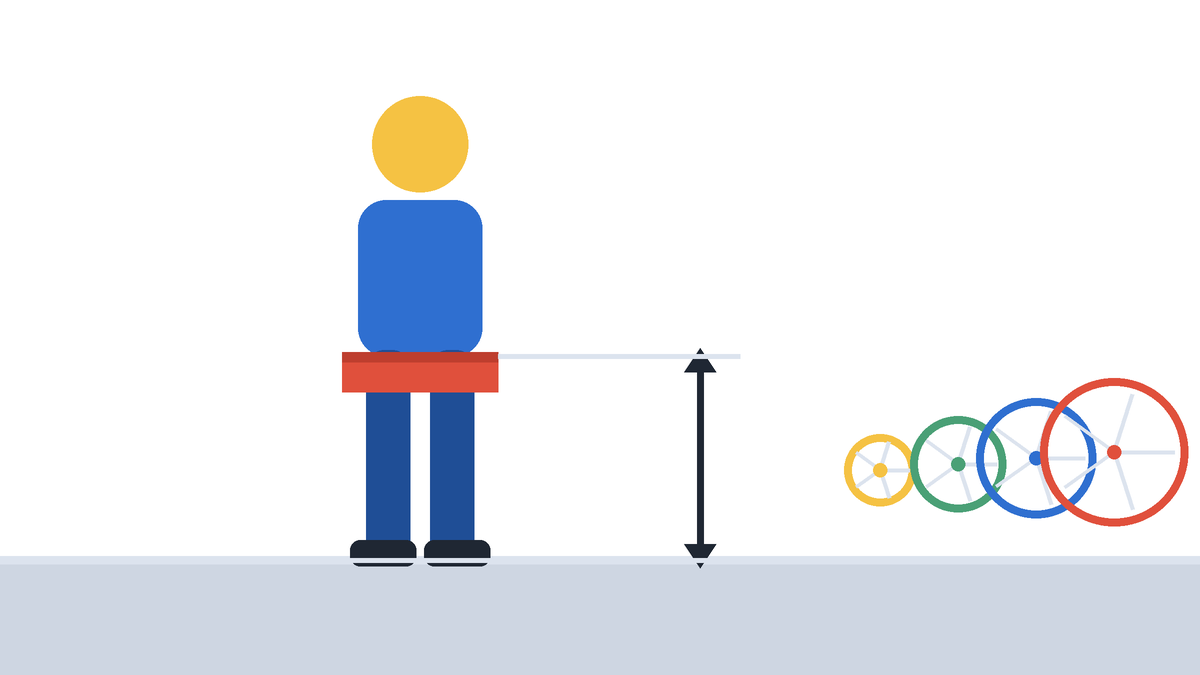
Nearly every shop sizes children's bikes by age: twelve inch for three-year-olds, sixteen for fives, twenty for sevens. Children do not grow to a schedule, and the chart is why a lot of first bikes spend a year in a hallway waiting to be grown into.
Measure once, decide everything
Stand the child against a wall with shoes off and feet slightly apart. Put a hardback book between their legs, spine up, and raise it until it sits firmly against the crotch. Mark the top of the spine on the wall and measure from the floor to the mark. That is the inseam, and it is the number that matters.
The reason it matters is simple: the child needs to be able to stand over the bike and, on a first bike, to sit on the saddle with both feet flat on the ground. Both of those are functions of leg length, not of age or overall height.
Turning inseam into wheel size
- Inseam 33 to 40 cm: a balance bike, or a 12 inch pedal bike.
- Inseam 40 to 48 cm: 14 inch, or a low-standover 16 inch.
- Inseam 45 to 55 cm: 16 inch.
- Inseam 55 to 63 cm: 20 inch.
- Inseam 63 cm and up: 24 inch, which is close to a small adult bike in geometry.
The ranges overlap deliberately. Where a child falls into two of them, take the smaller wheel for a first bike and the larger one for a child who already rides confidently.
The two measurements the chart does not give you
Standover height is the distance from the ground to the top tube. The child should clear it with both feet flat, with a few centimetres to spare. A bike that cannot be straddled is a bike the child cannot stop on.
Minimum saddle height is often the real limit, and it is rarely printed. Plenty of 16 inch bikes have a minimum saddle height too tall for a child who fits the frame perfectly, because the seat tube is long. Ask for the number, or measure it in the shop with the post pushed all the way down.
Buying room to grow, sensibly
A bike bought one size too big does not get grown into; it gets avoided. A child who cannot put their feet down does not feel safe and does not practise.
The growing room is in the seatpost, not the frame. A well-fitting bike with 8 to 10 cm of post left to raise will fit for two years or more.
Weight, which nobody puts on the chart
A supermarket 16 inch bike often weighs 11 or 12 kg. A child of that size weighs perhaps 20 kg, so the bike is more than half their body weight. The adult equivalent would be riding a 45 kg bicycle.
That single number explains most complaints about children not wanting to ride, and it is worth more attention than the colour, the suspension fork or the number of gears. Anything under about 40 per cent of the child's weight is manageable; under 30 per cent is genuinely good.
Checking the fit before you leave
Saddle at its lowest, child seated: both feet flat. Standing over the top tube: clearance. Hands on the grips: elbows slightly bent, not stretched. Fingers on the brake levers: able to reach and squeeze without shifting their grip. If all four are true, the size is right regardless of what the age label says.