The signs a bike has been outgrown
Updated 6 September 2026
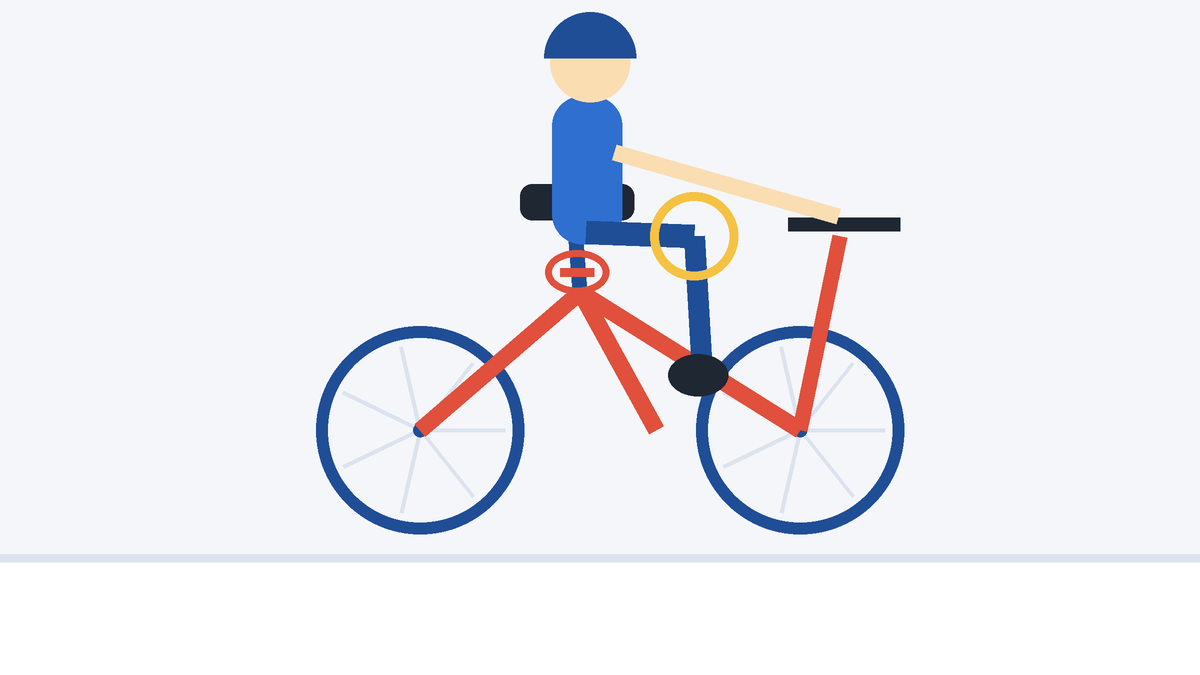
The bike that no longer fits is rarely announced. What happens instead is that it gets ridden less, then only on short trips, then it stays in the hallway. Adults tend to read that as losing interest in cycling, when the actual cause is a bike that has become uncomfortable to pedal.
Five signs
- Knees rising high on each pedal stroke, or knees coming close to the handlebars. This is the clearest sign and the easiest to see from the side.
- The seatpost at or near its minimum insertion line, with the saddle still too low for the leg to extend.
- The child sitting behind the saddle or leaning back to reach comfortably, which means the reach to the bars has become too short.
- Sudden reluctance to ride any distance, particularly uphill, in a child who was happy on the same route a few months earlier.
- Heels dropping and the child pedalling with the arch of the foot rather than the ball, which is what happens when the saddle cannot go high enough.
Checking it properly
Sit the child on the bike with a pedal at its lowest point and their heel on it. The leg should be almost straight, with a slight bend. If the knee is noticeably bent with the post already at its limit, the frame is too small regardless of what the wheel size chart says.
Then check standover. On a bike that has been outgrown, the child will have plenty of clearance over the top tube, which is the opposite of the problem they had when it was new.
Growth is not steady
Children grow in bursts, so a bike that fitted perfectly in autumn can be too small by spring with nothing having changed in between.
A quick check at the start of each season catches this before it turns into months of a bike not being ridden.
Getting another season
A bike that is close to too small can often be stretched. Raise the saddle to its limit, then fit a longer seatpost of the correct diameter, which is cheap and is the single most effective change. Check the diameter with a caliper or ask at a shop with the old post in hand.
Rotating the handlebars forward slightly, or fitting a stem with a little more length, adds reach if the child is cramped at the front. On a bike with an adjustable stem, this takes one hex key.
Moving the saddle back on its rails adds a small amount of effective reach too. Together these can genuinely buy six months, which is often exactly the gap between now and the end of a season.
When to move up
Move up when the leg cannot extend with the post at its limit, or when the child is riding markedly less on routes they used to enjoy. Do not move up simply because a birthday has happened or because the next size exists.
Time it for spring if you can. A new bike arriving at the start of riding weather gets ridden immediately; the same bike arriving in November sits in a hallway for four months and stops feeling new.
Passing the old one on
Clean it, pump the tyres, oil the chain and check the brakes before selling or handing it on. It takes twenty minutes, makes a real difference to the price, and means the next child gets a bike that works rather than a project.