Getting a child's helmet to actually fit
Updated 6 September 2026
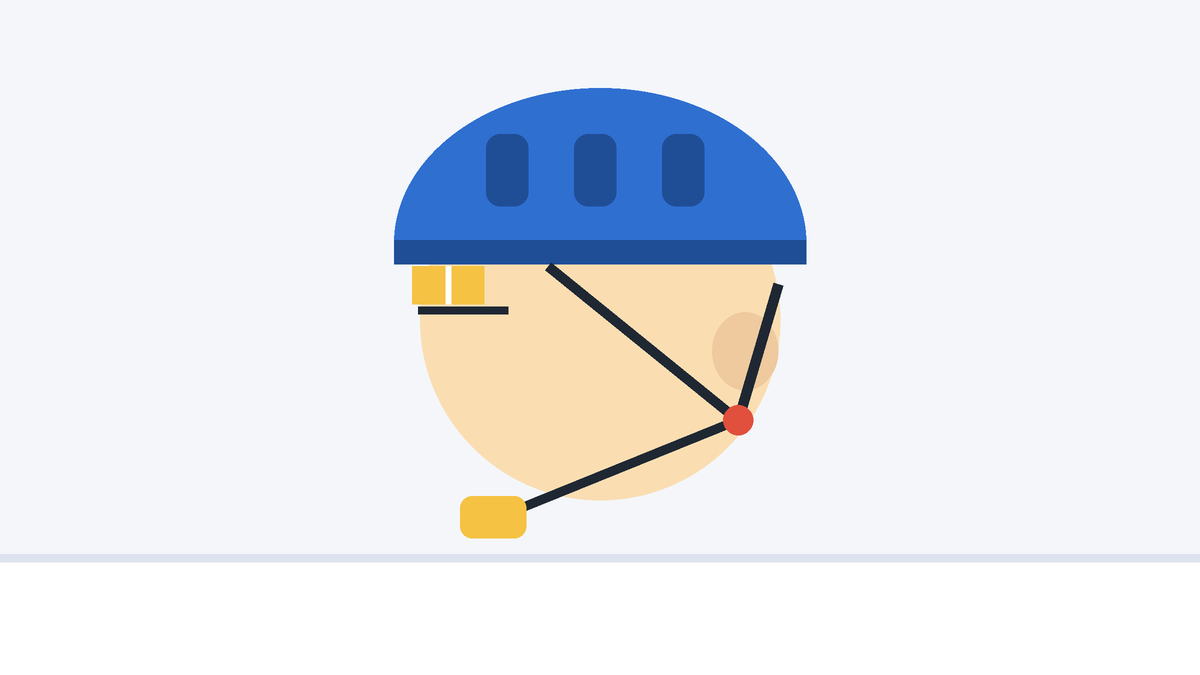
Walk past any park and most of the helmets you see are tipped back on the head with the straps hanging loose. A helmet in that position is not doing the job it was designed for, and the fix costs two minutes and no money.
Choosing the size first
Helmets are sized by head circumference, measured with a tape about a centimetre above the eyebrows and around the widest part at the back. Buy to that measurement rather than to age, and try it on before deciding — head shapes vary enough that two helmets in the same size can fit very differently.
Do not buy a helmet with room to grow. The retention dial gives you roughly a year of adjustment, which is the right amount of growing room. A shell that is too large cannot be dialled down enough to sit correctly.
The three adjustments, in order
- Position. Sit the helmet level on the head, not tilted back. The front rim should be about two of the child's finger-widths above the eyebrows. This step comes first because the other two are meaningless if the position is wrong.
- The side straps. Each strap should form a V that meets just below and slightly in front of the ear lobe. Most helmets have a slider on each side to set this; on many it starts far too low.
- The chin strap. Tighten until you can slide one finger between the strap and the chin, and no more. Ask the child to open their mouth wide — they should feel the helmet pull down slightly. If nothing happens, it is still too loose.
The two-finger check, every ride
Two fingers above the eyebrows, straps in a V below the ear, one finger under the chin strap. It becomes a five-second routine the child can eventually do themselves.
Teaching them to check it is worth more than checking it for them, because eventually you will not be there when they set off.
Testing the fit
With everything adjusted, ask the child to shake their head firmly side to side and then nod. The helmet should stay put and the skin of the forehead should move slightly with it. If it slides around independently, the retention dial at the back needs tightening before the straps do.
Then try to push the helmet backwards off the forehead with your palm, and forwards over the eyes. It should resist both. Rocking backwards is the most common failure and is nearly always a chin strap that is too loose rather than a helmet that is the wrong size.
Things that stop a helmet fitting
- Thick hair tied high. A ponytail at the back of the crown lifts the helmet off the head. Move it low, or use a helmet with a ponytail port.
- Winter hats underneath. A thin skullcap is fine; a thick woolly hat changes the fit completely and the straps need resetting.
- Straps that have crept. Sliders loosen over months of use. Recheck the V position every few weeks.
- A helmet that has been dropped hard onto a hard surface. The foam compresses permanently and does not spring back, even when the shell looks fine.
Replacing
Manufacturers generally advise replacing a helmet after a significant impact, and after around five years regardless, because the foam and straps degrade with heat, sweat and sunlight. In practice most children outgrow one long before either of those matters.
Second-hand helmets are the one piece of children's cycling kit not worth buying used, because you cannot see whether the foam has already been compressed. Everything else on a child's bike is fine to buy second-hand, and usually better made.