Riding together on city streets: positions and habits
Updated 6 September 2026
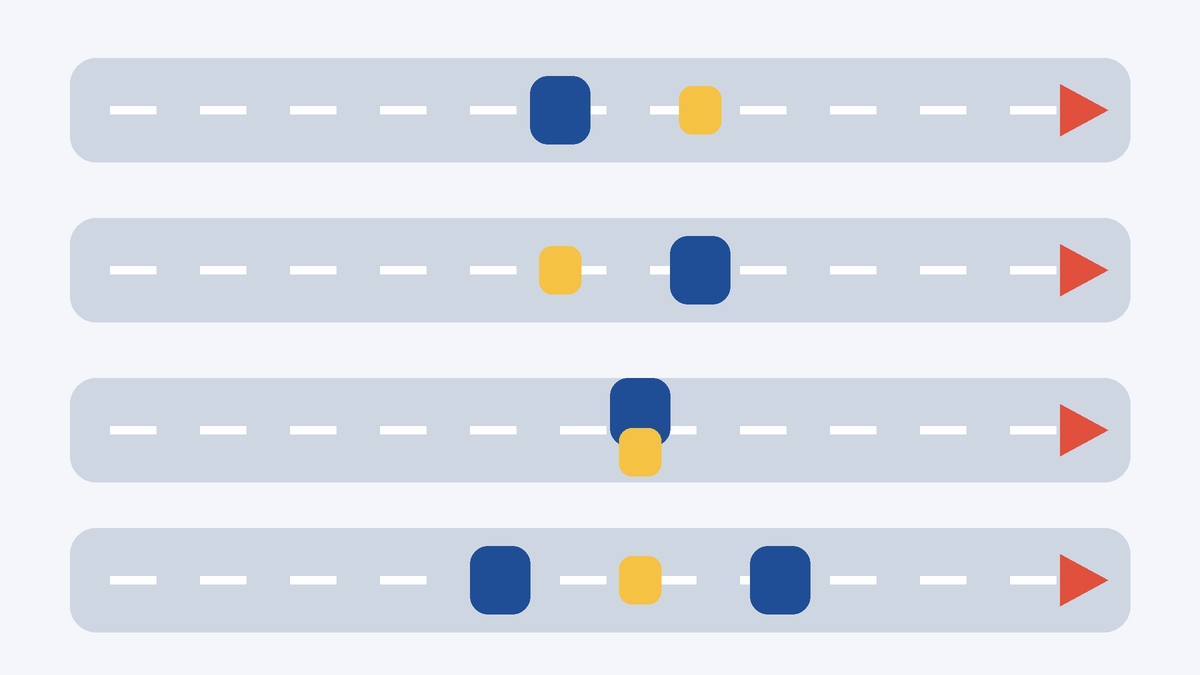
Once a child can ride, the question becomes where everyone goes. It is worth deciding deliberately rather than falling into whichever arrangement happens, because the position of the adult determines what the child can see, what they have to decide, and how much warning you get.
Behind the child
The default for most people, and the right one for quiet residential streets. You see everything the child does, you can call instructions forward, and you are between them and anything approaching from behind.
The weakness is that you cannot demonstrate anything, and the child is making every decision about line and speed first. On a route with junctions they do not know, that is a lot to ask.
Ahead of the child
Useful when the route is the difficult part rather than the traffic. The child follows your line, and following is much easier than choosing, particularly at junctions and around parked cars.
Ride slower than feels natural and check over your shoulder often. The common failure is drifting ahead without noticing, which leaves the child alone at exactly the moments you positioned yourself to help with.
Alongside
Only where the road is wide and quiet enough that two abreast is genuinely reasonable, and the adult takes the outside. It is the easiest position for talking, which matters more than it sounds — a child who is chatting is relaxed and looking around.
Two adults, child between
If there are two of you, this is the strongest arrangement for a longer or busier route. The child follows the front adult's line and the rear adult holds the space behind. It converts a difficult ride into a manageable one and is worth arranging deliberately for a first longer outing.
Agree the signals before you set off
Three words are enough: stop, slow, and wait. Say them the same way every time, and practise them once in the practice space so they are not new on the street.
Agree that the child stops at every junction regardless, without waiting to be told. A rule that applies always is easier for a child to hold than one requiring judgement.
Habits worth building early
- Stopping at every side road, even an empty one. Consistency beats assessment at this age.
- Looking back before moving out, even when it is not needed. It is a physical habit and takes months to become automatic, so start before it matters.
- Riding a door's width away from parked cars rather than tight against them. Children naturally hug the kerb, which is the one place worth teaching them out of.
- Getting off and walking whenever they want, with no comment from you. A child who knows walking is allowed will attempt more, not less.
Route choice does most of the work
The single biggest factor is which streets you use, not how you ride them. A route that is twice as long and avoids two main roads is the better route every time at this stage.
Ride it yourself first if you can. Things that are invisible to an adult on a familiar street — a blind exit, a stretch of broken surface, a hill steeper than it looks — are the things that catch a child out.
Length and expectations
Plan for a third of the distance you think is reasonable, and treat anything beyond that as a bonus. First rides on real streets are tiring in a way that practice sessions are not, because the child is concentrating continuously rather than repeating one thing.